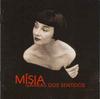
Product introduction
It's been a long time since a new work by a slightly nostalgic artist appeared for Fado fans. In the 1990s, the diva Meejia, who was seen as one of the successors of Amalia Rodriguez (1920-99), appeared on the fad scene, and released many albums in Japan, created an ambitious and progressive fad album.
Misia (real name: Suzana Maria Alfonso de Aguiar) was born in 1955 in the northern Portuguese town of Porto, but moved to Spain after the 1974 Carnation Revolution. She started singing songs there, and what she picked up was a pop music fado representing her home country. After that, she returned to Portugal in the 90s, when the activities of Queen Amalia of Fado declined, and she began to attract attention as one of the “Post Amalia,” and released her debut album “Misia (Misia)” in 1991. Since then, she has continued to release albums, and her works have been introduced by major labels such as WEA and BGM here in Japan, so it has become hugely popular.
And this work was announced as the first new work in 4 years since the 2015 film 'Para Amalia', which invited Maria Betania and others as guests, and this time it will be distributed domestically using an edition licensed by the Dutch Galileo label. In this work, which embodies the unique view of fado thought of by Migia, who has matured as a musician, and aims for really ambitious content, not only is the Portuguese guitar originally in charge of fado accompaniment, but the opening song suddenly develops a unique fado where only the bass clarinet interacts with the song. Furthermore, there are also arrangements where a piano or violin is added to the accompaniment, and sometimes features severely distorted electric guitars, etc., which even feels quite aggressive.
In addition to Misia's self-composed works, famous Fado songs composed by the Eternal Queen Amalia and the legendary guitarist Armandinho, and Piazzolla numbers, etc. are being taken up here. Also, please pay attention to the fact that a wide variety of guest musicians are participating, such as the male singer Daniel Meringo representing the current music tango that has been popular since ancient times, the Barcelona musician/guitarist referee who is also known as the producer of Louisa Sobral, and the male singer Ricardo Ribeiro representing the current fado scene. As the revival of traditional fado progresses among young people, Mijia is a veteran who is trying to find points of contact with various genres, progressive fado. Please feel her motivation in this film.
Materials provided by distributors/distributors (2019/05/29)
In the 1990s, the diva Mejia, who was seen as one of the successors of Amalia Rodriguez (1920-99), appeared on the fad scene, and released many albums in Japan, created such an ambitious and progressive fad album! (C) RS
JMD (2019/05/30)
Information on the work
main
Artist: Misia
Recorded Contents
Number of configurations | 1 sheet
Total Recording Time | 00:00:00
1. [CD]
1. Rosa Negra No Meu Peito II
artist
Misia
2. Ouso Dizer
artist
Misia
3. Corazon Y Hueso
artist
Misia
4. Os Homens Que Eu Amei
artist
Misia
5. Lagrima
artist
Misia
6. Ausencia
artist
Misia
7. Fado Dos 2 Pardais
artist
Misia
8. Escrivo Na Pele
artist
Misia
9. Destino
artist
Misia
10. Pasion
artist
Misia
11. Fadinho Do Anuncio
artist
Misia
12. Santo E Senha
artist
Misia
13. Preludio Para El Ano 3001
artist
Misia
14. Viagem
artist
Misia
format: CD
Number of configurations: 1
Domestic/Import: Domestic
PACKAGE SPECIFICATIONS: -
Release Date: 2019-06/16
To request a return or exchange, please note that it is mandatory to provide a video of the unpacking of the package.


 Reembolso por falta de entrega